
In a small farming community near Aframso in the Ashanti Region, nightfall once brought fear and darkness. Without electricity or streetlights, residents lived under constant threat from snakes, thieves, and accidents. Children struggled to complete homework, small businesses closed early, and daily life slowed as the sun set.
That reality is now changing thanks to solar streetlights, a clean energy solution that is not only brightening lives but also supporting climate action.
Light Brings Learning and Safety
For 11-year-old Aisha Umaru, a Class Five pupil at Aframso M/A Primary School, evenings used to end abruptly when darkness fell. “When it got dark, I could not read again,” she recalled. Children like 10-year-old Osman Adiza and 8-year-old Mohammadu Hawa often had to rush through homework or go to bed without understanding lessons.
Today, ten solar streetlights installed at key points in the community switch on automatically at night, allowing children to study safely and enabling residents to move freely.
“Nighttime was very difficult for us,” said Abubakar Garba, a local farmer. “Now my children can learn at night, and we feel safer.”
Supporting Ghana’s Climate Goals
Beyond safety and education, the project aligns with Ghana’s climate and energy policies, including efforts to expand renewable energy and reduce carbon emissions. By replacing kerosene lamps and small generators, the solar lights cut air pollution and greenhouse gas emissions.
“This project supports Ghana’s climate goals,” said Bawa Muhammed Braimah, Member of Parliament for Ejura Sekyedumase. “Solar is the way to go, especially as hydro power becomes less reliable and thermal power remains costly and polluting.”
The Ministry of Energy and Green Transition plans to provide 100 solar lights to communities across the constituency as part of Ghana’s clean energy transition.
Sustainable Local Development
Local leaders praise the project as an example of development that does not harm the environment.
“These lights have changed our community,” said Ali Zakari, Assembly Member for the Aframso Electoral Area. “They improve safety, education, and protect the environment.”
The initiative also contributes to global efforts, supporting the Paris Agreement and the United Nations Sustainable Development Goals (SDGs), including:
-
SDG 7: Affordable and clean energy
-
SDG 13: Climate action
-
SDG 4: Quality education
-
SDG 11: Sustainable communities
The solar lights were provided by Hearts of Mercy, a Belgian NGO supporting hard-to-reach communities with clean energy solutions, demonstrating how international support aligned with local needs can deliver meaningful social and environmental benefits.
As night falls, Aisha studies under the bright solar lights, children play safely, and farmers return home without fear. What was once a long, dark evening is now a symbol of hope, learning, and sustainable progress.
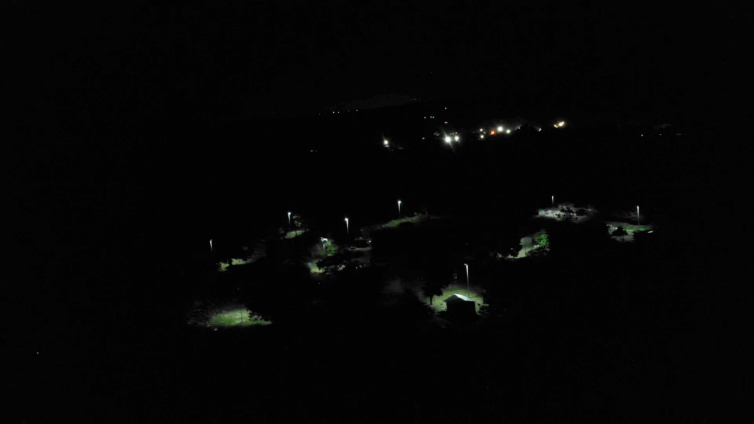
Aframso at night with the solar street lights