
The Ancient Roots: The Persian Civilisation
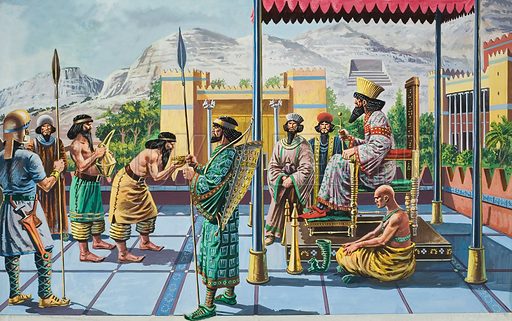
Iran’s historical identity stretches back more than 2,500 years, beginning with the rise of the first major Persian Empire under Cyrus the Great around 550 BCE. The Achaemenid Empire unified disparate tribes and built a polity extending from the Indus Valley to the edge of Greece. It became known for administrative sophistication, respect for local cultures, and architectural wonders such as Persepolis. After Alexander the Great’s conquest, successive Iranian dynasties—including the Parthians and Sassanids—sustained Iranian cultural and political influence until the Islamic conquests of the 7th century reshaped the region’s religious landscape.
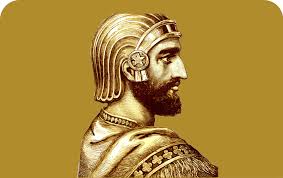
Over centuries, Iran developed a distinctive civilisation: politically resilient, culturally rich, and socially diverse. While Islam became dominant, Persian language and identity remained central to the nation’s continuity. This complex heritage set the stage for modern political developments long before the idea of nation-state sovereignty emerged in the 19th and 20th centuries.
Qajar and Pahlavi Iran: Tradition Meets Modern Pressures
In the early modern era, dynasties such as the Safavids and later the Qajars ruled Iran — but it was under Qajar weakness and Western imperial pressure that modern political fault lines emerged.
19th–20th Century Imperial Pressures
Throughout the 19th century, Britain, Russia and, later, the United States exerted influence over Iran’s politics and economy, seeking control over resources and strategic territory. This foreign entanglement weakened traditional elites and fuelled resentment among clerics, nationalists and intellectuals.
The Pahlavi Dynasty
In 1925, Reza Khan, a former military officer, seized power and established the Pahlavi dynasty. His son, Mohammad Reza Shah Pahlavi, became Iran’s ruler during World War II and pursued rapid modernisation. Large-scale reforms known as the White Revolution (1963–1979) introduced land redistribution, expanded education, development projects and rights for women. While these changes accelerated economic modernisation, they also disrupted traditional social structures and alienated many conservatives and rural communities.

The Shah’s reliance on a brutal secret police force (SAVAK), political repression and close alignment with Western powers, particularly the United States, deepened public discontent. Economic inequality persisted, and many Iranians felt culturally estranged by the perceived imposition of Western values.
The 1979 Islamic Revolution: Overthrow of the Shah
Dissatisfaction culminated in revolution. Between 1978 and 1979, mass protests brought together secular nationalists, leftists and religious groups united against the Shah’s autocracy. Leading the movement from exile was Ayatollah Ruhollah Khomeini, a Shia cleric whose calls for governance rooted in Islamic principles resonated widely.
On 1 February 1979, Khomeini returned to Iran amid overwhelming public support. Within weeks, the Shah fled the country, and on 11 February, the monarchy collapsed. A coalition that had helped topple the Shah quickly gave way to clerical dominance. By referendum later that year, the Islamic Republic was formally established, anchored in the doctrine of velayat-e faqih (guardianship of the Islamic jurist), which vested ultimate authority in a Supreme Leader.

The Clerical Republic Begins: Ayatollah Khomeini and the First Presidents
Ayatollah Ruhollah Khomeini became Iran’s first Supreme Leader — a position designed to unify religious authority and political power. Under his leadership, the state rapidly transformed: secular institutions were replaced with Islamic governance, political dissent was suppressed, and Iran’s foreign policy adopted a fiercely anti-Western posture.
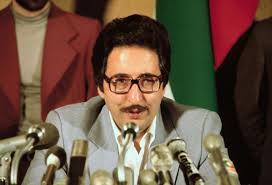
The presidency, established under the new constitution, became Iran’s second executive office. The first president was Abolhassan Banisadr, elected in February 1980. However, internal power struggles with clerical hard-liners led to his impeachment in June 1981; he fled into exile, illustrating early tensions between civilian leadership and clerical oversight.
Presidents and Political Dynamics in the Islamic Republic
Following the revolution, Iran alternated between conservative and reformist presidents — but true power remained with the Supreme Leader. Notable presidents include:
Ali Akbar Hashemi Rafsanjani (1989–1997): Oversaw post-war reconstruction and attempted economic liberalisation while navigating conservative factionalism.
Mohammad Khatami (1997–2005): A reformist who pushed for political openness and improved international relations but often clashed with the conservative clerical establishment.
Mahmoud Ahmadinejad (2005–2013): A hard-line populist whose tenure heightened tensions with the West over Iran’s nuclear programme.
Hassan Rouhani (2013–2021): Pursued diplomacy, culminating in the 2015 nuclear agreement with world powers; critics argued domestic political repression continued despite external engagement.
Ayatollah Ali Khamenei: From Revolutionary to Supreme Leader
Perhaps no figure has shaped post-revolutionary Iran more than Ayatollah Ali Khamenei. Born in Mashhad in 1939, he rose through religious education and opposition to the Shah alongside Khomeini. During the early years of the Islamic Republic, Khamenei served in various political and military roles and was elected president in 1981 after an assassination attempt disabled his predecessor; he served two presidential terms.
In 1989, upon Khomeini’s death, the Assembly of Experts appointed Khamenei as Supreme Leader. Although initially seen as less charismatic than his predecessor, he consolidated power effectively and became Iran’s longest-serving leader.

Role and Power as Supreme Leader
As Supreme Leader, Khamenei held ultimate authority over the executive, judiciary, military (notably the Islamic Revolutionary Guard Corps), and foreign policy. His rule was marked by:
Domestic repression: Harsh crackdowns on reformists and protesters — including major movements in 2009 and 2022 — drew widespread condemnation.
Regional assertiveness: Support for allied militias and proxy groups such as Hezbollah and Hamas positioned Iran at odds with the United States and Israel.
Nuclear ambitions: Iran’s contentious nuclear program became a central flashpoint in international relations.
Centralisation of power: The IRGC’s influence expanded across political and economic spheres.
By the mid-2020s, internal discontent had grown due to economic stagnation, international isolation and continued repression. Persistent protests reflected deep societal divisions.
The Downfall of Khamenei: End of an Era
In early 2026, Ayatollah Ali Khamenei was reportedly killed in a joint US-Israeli strike, marking a dramatic turning point for the Islamic Republic. His death exposed systemic vulnerabilities within Iran’s leadership structure and triggered uncertainty about succession. Without a clear heir, Iran faced internal power struggles, with the Assembly of Experts and interim authorities navigating a fraught transition. Public unrest surged, with some opposition voices calling for broader political change.
While Khamenei’s rule did not end through popular uprising, the conditions that led to his downfall were tied to long-standing grievances: economic hardship, political repression and resistance to calls for reform — factors that had simmered since the Revolution itself and intensified over decades.
Conclusion: Iran at a Crossroads
Iran’s history reflects deep continuities: from ancient imperial grandeur to modern struggle over governance, identity, and sovereignty. The transition from monarchy to theocratic republic reconfigured political power but did not resolve underlying tensions between state authority and popular aspirations. The era of Supreme Leader Ali Khamenei—one of the most consequential in Iran’s modern history—ended amid geopolitical turmoil and internal dissent, leaving the nation at a pivotal juncture.
As Iran navigates what comes next, its long history of resilience, cultural depth and political complexity will continue to shape its path forward.
Sources:
Wikipedia
Britannica