
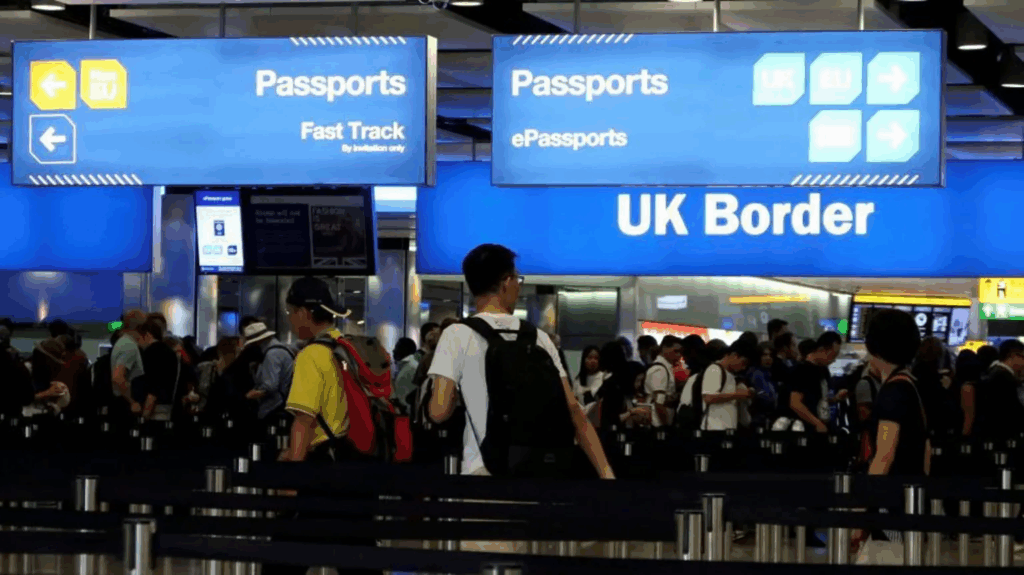
British dual nationals say they risk being prevented from returning home under new passport rules due to take effect later this month. From 25 February, British citizens who hold another nationality will no longer be able to enter the UK using only their non-British passport, even if that passport is from a country that does not require a visa.
Instead, they will need to present either a valid British passport or a digital certificate of entitlement confirming their right of abode. Without one of these documents, airlines may refuse to allow them to board flights to the UK.
The changes form part of wider reforms to the immigration system, including the rollout of the Electronic Travel Authorisation (ETA), which requires visa-free visitors to obtain a digital entry permit before travelling. Dual nationals are not eligible for an ETA and must instead travel on proof of British citizenship.
The government says the measures will modernise border controls and bring the UK into line with countries such as the United States and Australia. But some dual nationals say the changes have been poorly communicated and risk leaving people stranded abroad.
“It feels like a betrayal.”
Jelena, a British-Latvian dual national who has lived in the UK for 16 years, says she may not be able to return to her home in Glasgow after a planned trip to South America. The 34-year-old chartered surveyor became a British citizen in November but did not immediately apply for a British passport because she was travelling to see family and could not send off her Latvian passport as part of the application.
She told the BBC she only recently became aware of the rule change. “As it stands, after South America, I won’t be able to return to my flat in the country I have lived in for nearly 16 years,” she said.
Jelena now plans to travel to Latvia after her holiday to apply for a British passport from there, potentially facing weeks or months of waiting.
“If I hadn’t applied for citizenship and just had an EU passport, I would be in a better situation,” she said. “The irony is that I’ve chosen to be part of this country, but it feels like I’m being deported.”
Scramble for documents
Under current rules, British dual nationals whose second nationality is from a visa-free country have been able to travel to the UK using that foreign passport. From 25 February, that will no longer be possible. A standard adult British passport costs about £100. A certificate of entitlement costs £589. Neither is automatically issued when someone becomes a British citizen.
Petra Gartzen, a UK-German dual national who has lived in Britain for 40 years, said she found out about the changes through social media while staying in Spain.
“There was no major announcement – I found out from a Facebook post,” she said.
She has applied for a British passport from abroad but says the process has been complicated by requests for original documents stored in the UK.Others have raised similar concerns, including delays linked to passport renewals and difficulties arranging appointments overseas.
Campaign group the3million, which represents EU citizens in the UK, has urged the government to pause the changes and introduce a temporary, low-cost travel authorisation for affected dual nationals.
Government response
The Home Office says public information advising dual nationals to carry the correct documentation has been available since October 2024 and that a communications campaign on the ETA system has been running since 2023.
A spokesperson said, “This requirement applies to all British citizens regardless of other nationality and is the same approach taken by other countries, including the United States, Canada and Australia.” Irish passport holders are not affected.
According to the 2021 census, more than 1.2 million UK residents hold dual nationality involving the UK. For some, the coming deadline has prompted urgent applications and revised travel plans. For others, it has raised wider questions about how the changes were introduced – and whether they leave long-standing residents facing uncertainty about returning home.