
A JoyNews investigation has uncovered what it describes as an organised pay-to-operate system that allows illegal mining activities to continue in the Amansie Central District of the Ashanti Region.
The findings, contained in the Hotline Documentary, suggest that local authorities are charging miners annual fees to operate banned equipment, effectively permitting environmentally destructive galamsey operations.
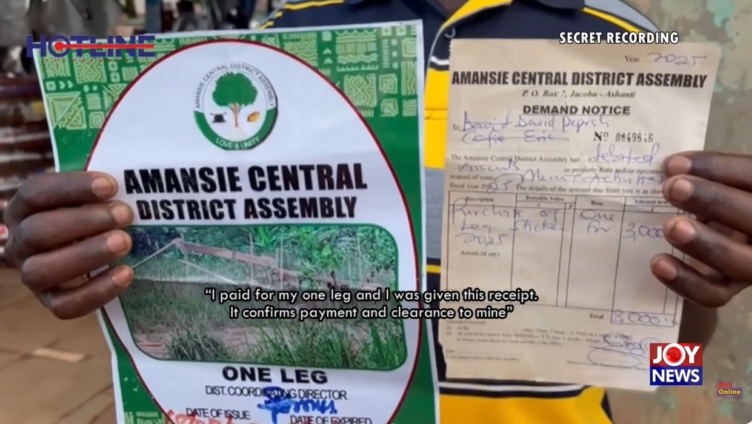
According to the exposé, the district assembly formed a task force that issues official stickers to operators of prohibited mining machinery, including changfangs — mechanised floating platforms used to wash gold directly in rivers and other water bodies.
Despite a nationwide ban on changfangs, the documentary captured evidence of miners paying GH₵6,000 per year to use the machines.
The District Chief Executive for Amansie Central, Emmanuel Agyemang, is heard in a recording admitting to authorising the printing of the stickers linked to the payments.
“I am the one who authorised the printing of the stickers to be brought to the site. Yearly payment for changfangs is 6,000 or so — meaning 3,000 for every six months,” the DCE stated.
The investigation alleges that the arrangement amounts to tacit approval for miners to continue operations that pollute rivers and degrade forest lands.
JoyNews further reports that the payment system extends beyond changfangs. Operators of heavy-duty excavators are also said to pay significant sums to local officials to prevent their equipment from being seized during periodic military-police anti-galamsey exercises, including Operation Halt.
Environmental experts say the revelations help explain the persistent challenges in Ghana’s fight against illegal mining.
Major rivers such as the Pra, Ankobra and Birim have recorded high turbidity levels, making water treatment difficult for the Ghana Water Company Limited. There are also concerns about mercury and cyanide contamination of soil and food crops, as well as widespread destruction of forest reserves and cocoa farms.
Civil society groups and environmental advocates have reacted strongly to the documentary, calling for immediate action against officials implicated in the scheme.
Some groups are urging the Office of the Special Prosecutor to investigate, arguing that the DCE’s admission could constitute abuse of office and facilitation of environmental crime.
The calls come as the judiciary recently established specialised courts to fast-track galamsey and corruption-related cases.
Authorities are yet to officially respond to the documentary’s findings.
Source: myjoyonline.com.