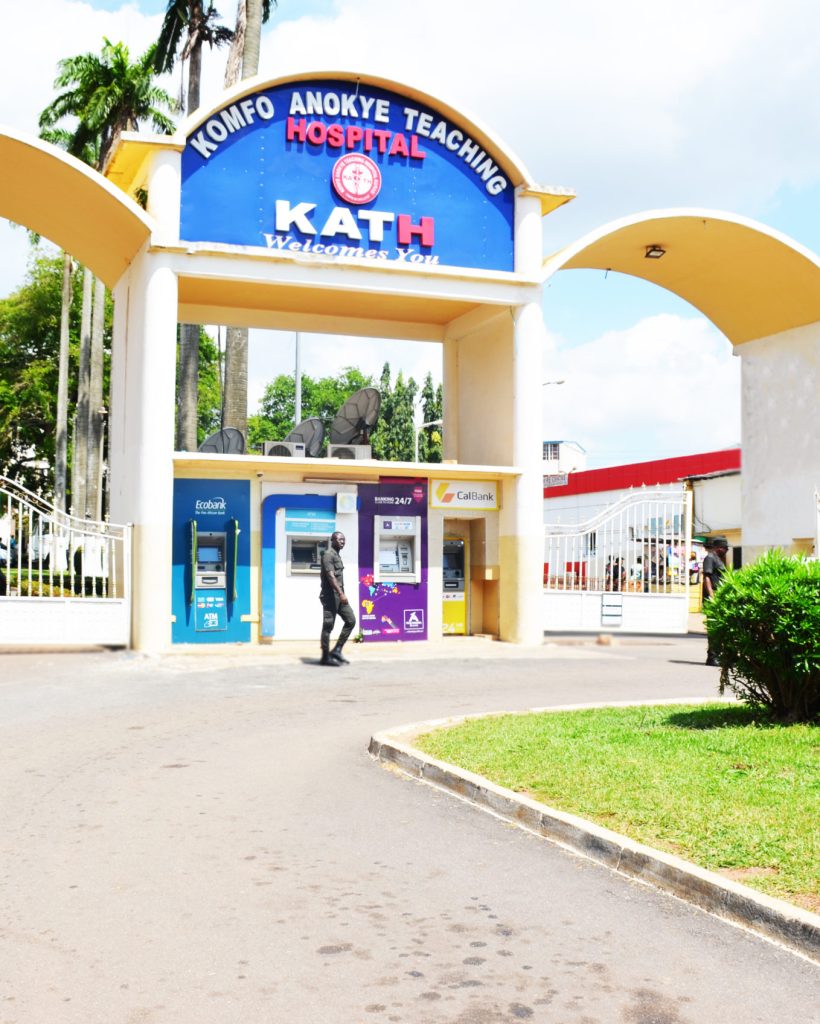

The Komfo Anokye Teaching Hospital (KATH) has said it is being forced to keep hundreds of patients on admission beyond the point of medical discharge because they are unable to pay their hospital bills, a situation contributing significantly to congestion at the facility.
Hospital management says the practice is limiting bed availability, stretching resources and affecting the delivery of emergency and specialised care.
Speaking on the matter, the Chief Executive Officer of KATH, Dr Paa Kwesi Baidoo, explained that unpaid bills leave the hospital with few options, even when patients are clinically fit to go home.
According to him, many patients remain on the wards for weeks, occupying beds that should be freed for new admissions.
“There are a lot of people you wish they could go home because once they are here, they occupy a bed. You need to feed them. Sometimes they stay for several days or weeks, but you cannot simply tell them to leave,” he said.
Dr Baidoo stressed that the hospital cannot resort to inhumane measures in response to the situation.
“You cannot say, ‘Because you haven’t paid, give me the bed and sleep on the floor.’ That is not humane. But that is part of what contributes to the congestion we face,” he added.
He explained that the backlog at the wards often disrupts the hospital’s entire care chain, including emergency services and surgery.
“When patients come in through emergency, some may need surgery and others admission to the ward. But if the beds are already occupied by patients who should have been discharged, then we are unable to move new patients to the ward,” Dr Baidoo said.
He noted that the delays also place pressure on theatre services and recovery units, affecting the hospital’s efficiency.
Addressing members of the Ashanti Business Association during an engagement aimed at mobilising support to help clear unpaid bills, Dr Baidoo said the hospital is under obligation to account for every service provided.
“Every service rendered here must be accounted for. If patients are treated and discharged without paying, questions will be asked,” he said.
“If you do that, the next thing is that you will be before the Public Accounts Committee explaining why patients were treated and no payment was made.”
Dr Baidoo further pointed to KATH’s national appeal as a referral centre as an additional factor worsening congestion.
He revealed that senior health officials had raised concerns about patients travelling from distant regions to seek care at KATH, even when facilities in Accra or elsewhere were geographically closer.
“Because of the services we provide and the patience we show in accommodating patients, people from all over the country come here,” he noted.
He said delayed discharges ultimately affect the hospital’s ability to function effectively.
“When patients are unable to go home, it creates a chain reaction that significantly impacts our services,” Dr Baidoo added.